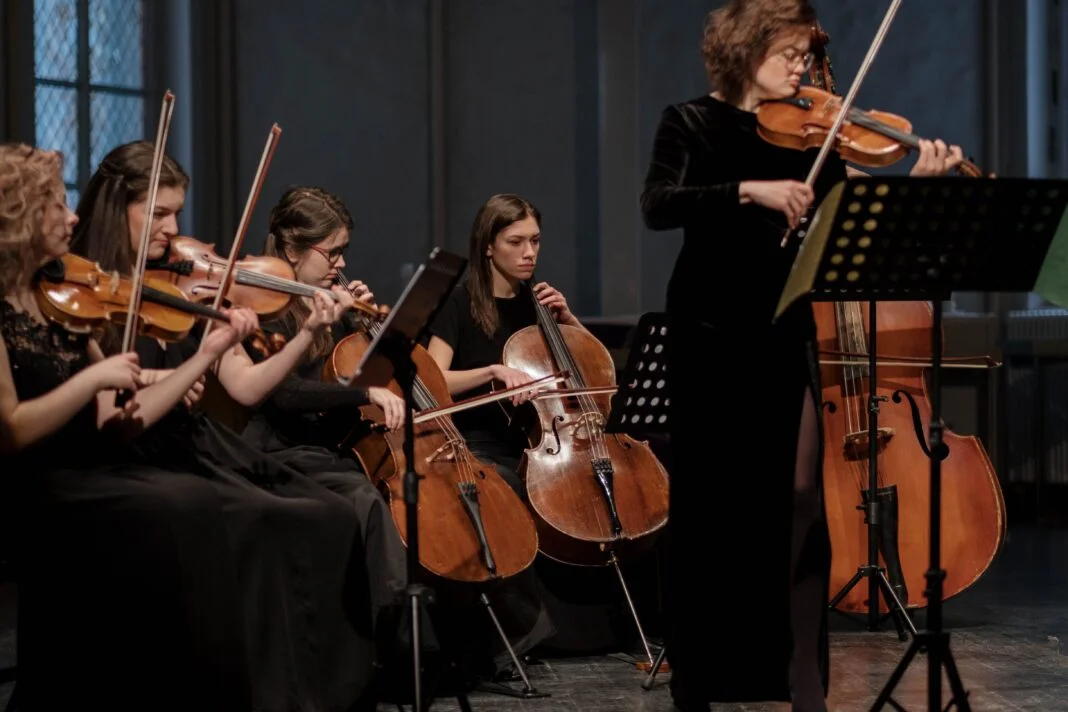
Ever sat in a concert hall listening to a violin solo, totally immersed, and thought, why does that instrument sound so good? Or perhaps you’ve come across two violins in a shop that appear to be similar, with one being priced at a few hundred dollars and the other at the price of a new car.
It’s easy to think that a violin is a violin, but if you ask any seasoned player you will find that choosing an instrument is a very personal choice. Pros are notoriously selective about what they play, and frankly they have to be. The violin is almost an extension of their body and voice. Every detail from the way the wood is carved to the way it vibrates against your chest completely changes the way you connect with your music and your audience.
So, let’s find out what makes a good violin different from the rest, and why do violinists prefer certain instruments.
See the Tone of Violin
When a violinist picks up a bow to try out an instrument, the first thing they listen for is the overall tone. Tone is the voice of the instrument itself. No two violins sound the same, just like human voices sound completely different from each other.
Tone testing generally involves listening for a few key qualities to assess balance:
- Warmth and Depth: That rich, round, almost cozy low G and D string sound.
- Perceived Brightness and Clarity: Sweet, clear high notes on the E string that sing out but don’t hurt your ears or sound shrill.
- Sound Complexity: Small background overtones that create a big, 3D acoustic image instead of a flat, boring note.
Different types of music require different types of tone. A soloist playing a big romantic piece might want a deep, powerful instrument with lots of attitude. Conversely, someone playing in a string quartet might want a smooth, velvety violin that blends in easily with the other players. Paying close attention to these sound characteristics helps you zero in on what you really want out of an instrument.
Think Sound Projection
What a lot of people don’t realize is that there’s a big difference between a loud-sounding violin right under your left ear and one that actually projects all the way to the back row of a huge auditorium. This ability to travel is called sound projection.
That same violin might sound super sweet when you’re holding it in a tiny practice room. But if that disappears the second you step on a big stage or perform with an orchestra, it’s not going to work for a performing musician.
- Loudness vs. Projection: Loudness is just raw noise at the source. Projection is how tight the soundwaves are as they carve through a room.
- How It’s Built: The shape of the wood, the thickness of the body, and the balance inside dictates if the sound blasts out or gets stuck inside.
Strong projection is not optional if you are a musician that plays live venues. They want an instrument that will cut through the room without them having to press down super hard with the bow or strain their muscles.
Assess Responsiveness
Tone is what you hear. Responsiveness is what you feel in your hands. Responsiveness is essentially how fast and easy the violin speaks when the bow hair touches the string.
Picture driving a sports car, with its razor-sharp steering, rather than a massive truck that requires a second to respond. Violins operate in exactly the same way:
- Instant Response: A great, responsive violin will respond instantly to the lightest touch of the bow.
- Clean Notes: Fast passages, quick staccato notes, and fast string shifts sound sharp and clean instead of muddy or delayed.
- Consistency: The instrument feels stable whether you are playing low open strings or reaching for high notes near the end of the fingerboard.
When an instrument responds you do not struggle with it. You can really just concentrate on music and the emotion instead of worrying if the notes are going to speak clean.
Check the Craftsmanship and Construction
At the end of the day, a violin is a delicate wooden box glued together with tension and angles. How well it’s assembled is directly related to how it feels to play and how well it ages over time.
Some construction details to look out for are:
- Quality Tonewoods: Aged spruce top plate and gorgeous maple back and sides give you the best acoustic foundation.
- Arching and Curves: The soft arch made in the front and back impacts the strength, flexibility, and how the wood vibrates.
- Internal Setup: The tiny soundpost and bass bar hidden inside must be carved and fitted with extreme care to balance out the string tension.
Even a slight change in wood density or a millimeter of carving thickness makes all the difference. This is why, handmade violins made by skilled luthiers usually have so much more character and better playability than mass produced factory models.
Match the Player with the Instrument
Here’s a little secret that all experienced players discover at some point: there is no such thing as a “perfect” violin that works for everyone. What sounds like pure magic in one person’s hands may feel stiff, heavy or lifeless to someone else.
Usually to find the right match it is a question of three things:
- Your Bowing Technique: Light, gentle players require a violin that is very sensitive. Heavy-armed players require an instrument that will not choke under pressure.
- Your Personal Taste: Some players love bright, crisp, modern-sounding instruments while others are simply hunting for dark, vintage tones.
- Physical Comfort: The neck shape, weight balance, and body size all affect how your neck and shoulder feel when you are practicing for long periods.
It comes down to synergy. It is much more important that you find an instrument that fits your hands and playing style than paying for a fancy label or a sky high price tag.
Test Instruments Hands On and Compare
If you’re out shopping for an instrument, the best thing you can do, absolutely, is to try a bunch of them side by side. Do not buy a violin because it looks pretty or because it matches some price range on paper.
Here’s a good way to compare options:
- Play the Same Tunes: Play the same songs for each violin: a slow song, a fast scale and some heavy chords.
- Switch Rooms: Start in a small room, then move into a larger room or hall and notice the change in the sound.
- Bring an Extra Pair of Ears: Have someone play for you, a teacher, a friend, or a staff member at a violin shop that you can stand across the room from. Instruments sound completely different when they are far away from you than when they are right up against your jaw.
Playing a few violins back to back makes it so much easier to hear those subtle differences in tone, volume and comfort, giving you a clear idea of what makes a good violin for your own playing style.
Final Thoughts
The professional violinists ultimately make their choice by taking a big picture view: tone, projection, responsiveness, craftsmanship and how it feels in their hands.
Everyone plays a little differently, and so everyone’s dream violin is going to look and sound a little different, too. Having an idea of what to look for makes it so much easier to navigate the options and find an instrument that really allows your playing to shine.
